Neighbourhood Rescuer
End-To-End Process
Overview
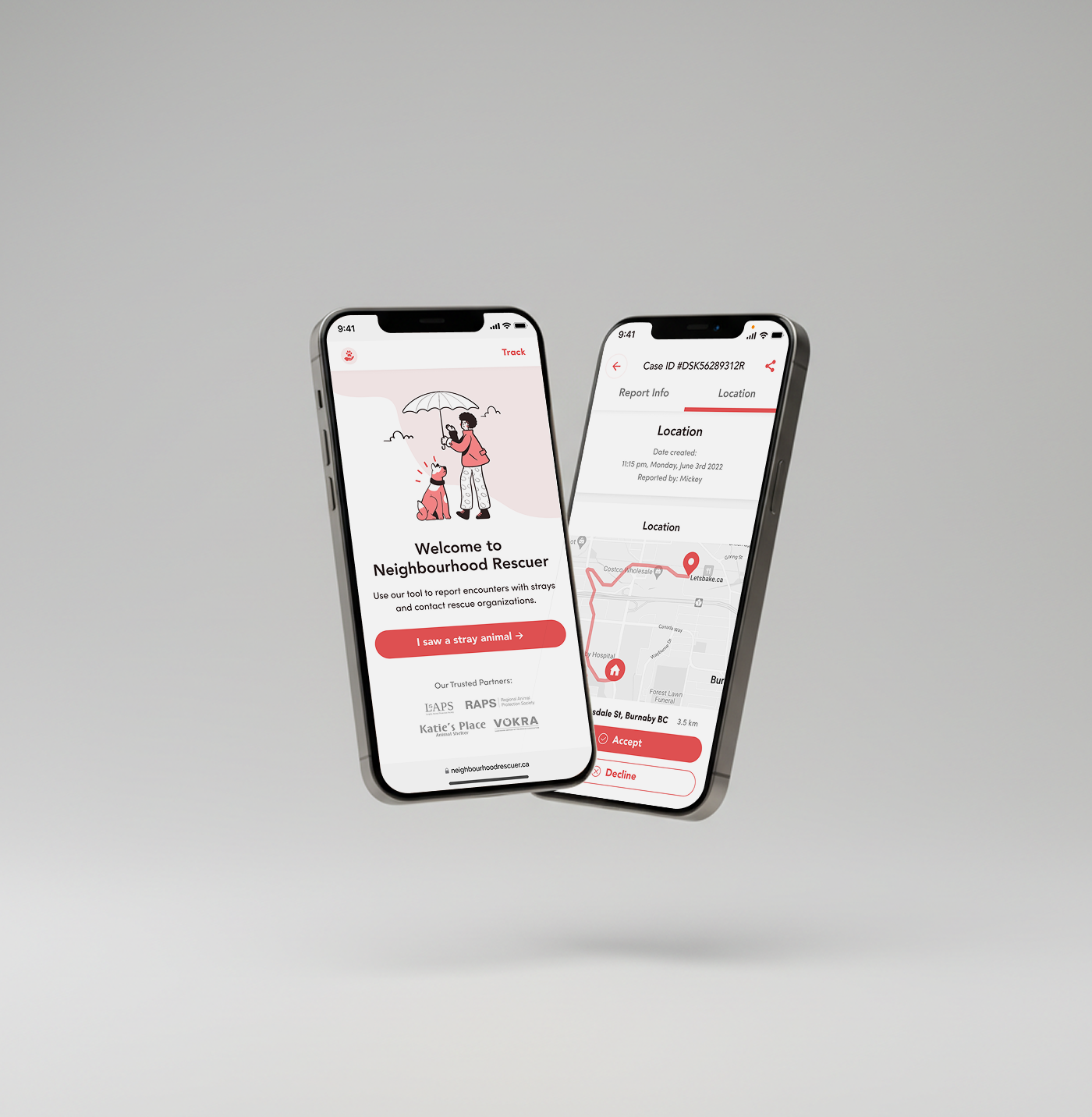
Neighbourhood Rescuer is a dual platform system that aims to improve the rescue process of stray animals in your community.
Following a short situational assessment, individuals are provided the required resources to take appropriate action on the situation - including the opportunity to connect with an experienced rescue volunteer nearby.
Problem
The real problem isn't a lack of resources — Google searches do surface rescue organizations and hotlines. It's that an inexperienced finder has no way to know which one applies. Is the animal lost, a stray, injured, or in no danger at all? Without a clear read on the situation, people can't tell whether they're looking at the right contact, the right organization, or whether the animal needs intervention in the first place.
Design Statement
How might we empower individuals who encounter strays to better respond to them in their time of need?
Solution
Neighbourhood Rescuer
An online tool that will increase the success of stray animal rescue by providing people a way to quickly determine what to do given their unique situation and, if needed, contact appropriate help.

VanUX Awards
Named a finalist (top 3), Best Student Project, 2023 VanUX Awards. This recognition provided validation of both the process and outcome.

Prototypes
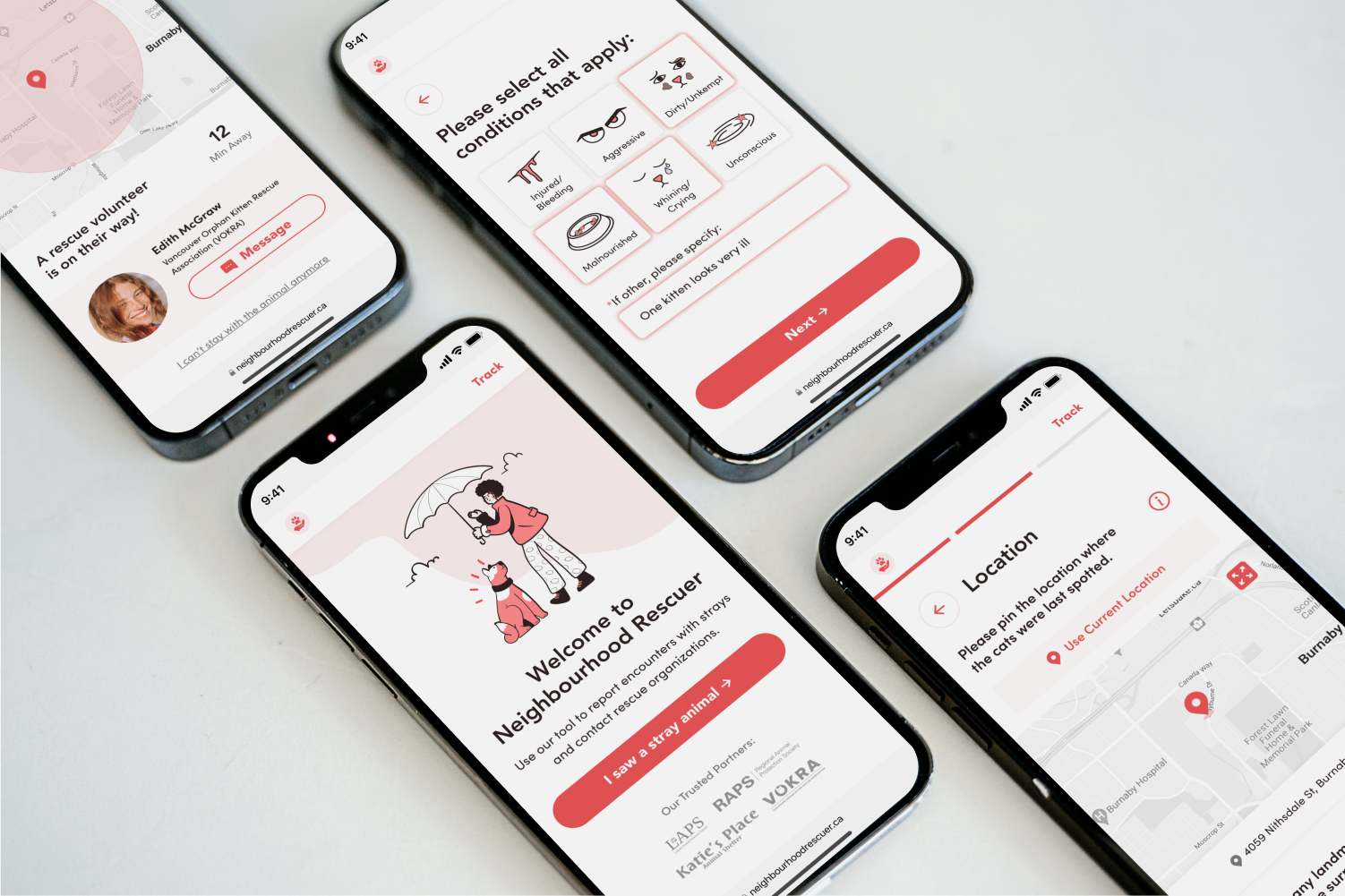
Finder’s Web App
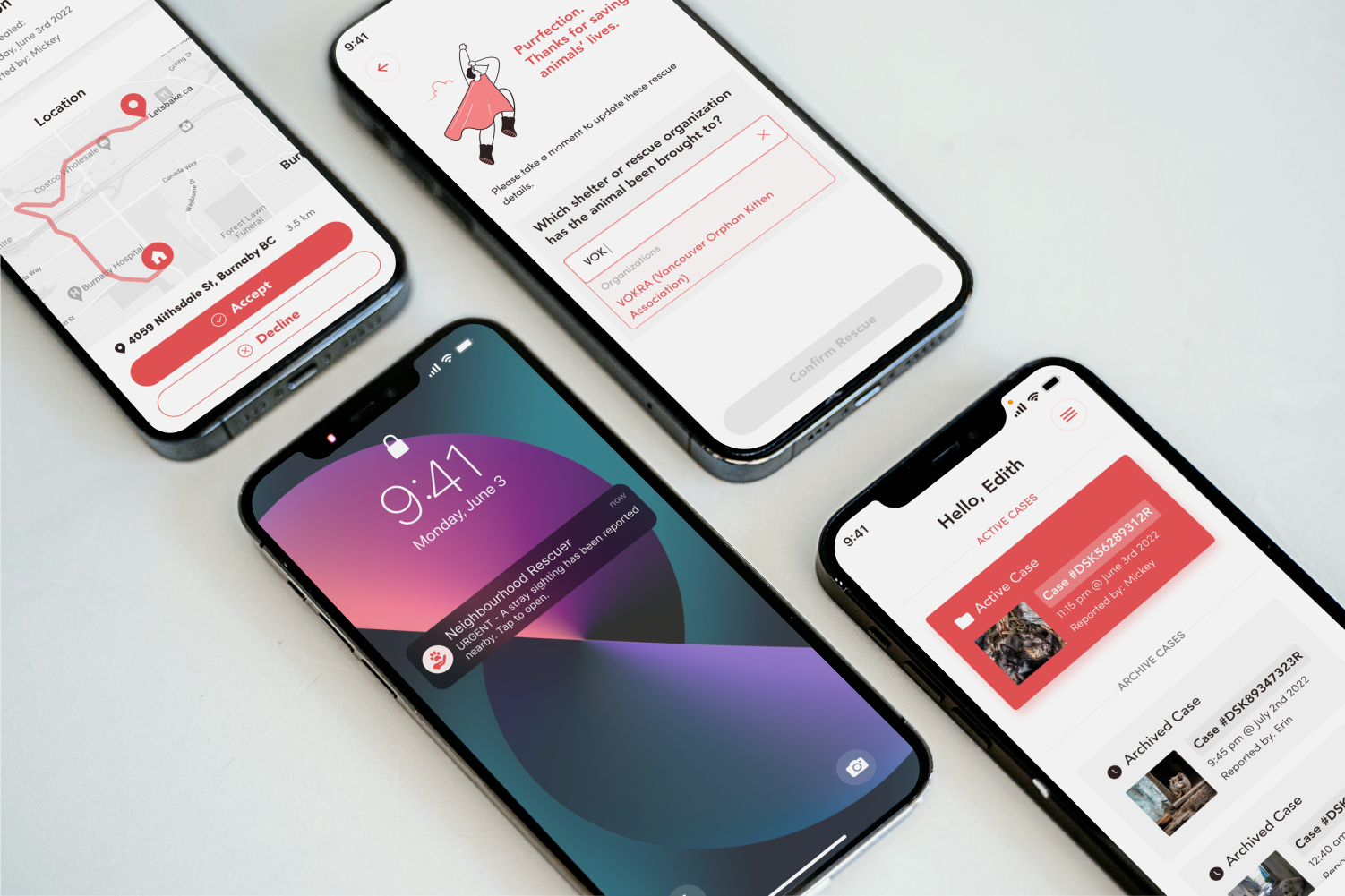
Rescuer’s Mobile App
Onboarding for Mobile App
Roles & Responsibilities
UX Research
- Domain Research
- User Interviews
- User Testing
UI Design | Figma
- Workflows
- Rescuer Mobile App
Illustration | Procreate
- Injury Graphics
- NR Logo
Prototyping | Protopie
- Web App
- Mobile App

Process
Research
We used three methods to understand the problem: interviews with people who'd experienced stray encounters, rescues, or shelter work, analysis of online search results, and review of online forums and communities (Reddit, Facebook) where people sought or gave advice. Research also pointed to Gen Y/Z as the target user.
Across all three methods, one pattern held: when someone finds a stray, they turn to Google and forum threads, not a direct resource.
The real problem wasn't a lack of information — it was no clear path to the right help. Search results are inconsistent and rarely account for urgency or location. Professional help isn't always available (limited clinic hours), and even successful rescues often hit a housing bottleneck. This shaped our guiding question: How might we empower individuals who encounter strays to better respond to them in their time of need?
We scoped two platforms (web and mobile) matched to two different contexts: a one-time, unplanned encounter vs. an experienced volunteer's ongoing use.
User Personas
Built around two people on opposite sides of one interaction: Mickey, an average person who unexpectedly finds a stray, and Edith, an experienced rescue volunteer.
- Mickey — wants to help but doesn't know how; frustrated by unclear information, eager for fast guidance
- Edith — wants more consistent public engagement in stray care; frustrated by limited clinic/shelter accessibility
Designing for both at once defined the platform's core goal: help people quickly determine what to do — including whether rescue is even needed — and connect them to the right contact for help.
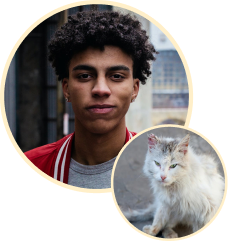
User Persona : Encounters the stray
Mickey
Triggers:
- Had lost a pet when was he was 10 ever since then has grown fondly to help pets and wants to do something that helps the world by giving back to the community.
- Has been hearing in the news of how a lot of the pets were fostered or adopted during the COVID times which motivated him to help.
- Is annoyed that when in need of important information regarding animal rescue, he has to surf through a lot of website to find a crucial answer.
Goals:
- Eager to find a platform that could easily connect him to volunteers and people who foster animals to know more about the process.
- Wants a quick solution in terms of helping animals in need especially stray animals.
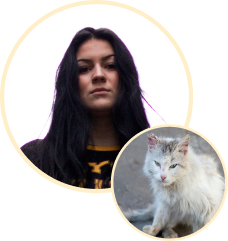
User Persona : Rescue Volunteer from Organization
Edith
Triggers:
- Wants people to be proactive with volunteering and helping the community when it comes to saving animals
- She is frustrated when people surrender their pets due to their own ignorance about they pet’s needs, especially when they abandon their animal after they’ve adopted them during COVID times and are now unable to make the time to care for it because they no longer work from home
- Has noticed a lot of clinics & shelters are inaccessible after a certain time
Goals:
- Wants more engagement from young people and wants to find a way that makes volunteering an easy process
- Wants a solution that connects willing volunteers and foster caretakers to people like Mickey when they come across a stray animal, injured or not.
User Journey Mapping
Mapped three journeys:
- Mickey without the platform,
- Mickey with it, and
- Edith responding as a volunteer.
Starting with the "without" journey let us pinpoint exactly where the current process breaks down before designing around those failure points.
Each journey tracked doing, thinking, and feeling at every step, surfacing insights the interviews alone hadn't, like how much uncertainty builds before Mickey even starts searching. Comparing "with" vs. "without" side by side became the clearest evidence of the platform's value: same starting point, dramatically shorter path to resolution.
Journey 01
Mickey encounters stray kittens on his way home. He does not use Neighbourhood Rescuer.
Doing
Thinking
Insights
Mickey waits for the bus home alone at night in a quiet neighborhood. It’s 11:30PM.
He hears meowing and discovers a small litter of kittens hiding behind the bushes.
“What are they doing here? I wonder what happened to them and where they came from?”
“What should I do? I’ve never been in this situation before.”
“Oh good, they should be able to help me.”
“Nevermind, that was not helpful.”
Many shelters and clinics have limited operation hours.
Search engine results are long, varied and often do not address urgency of situation.
People, between the ages of 18 to 29 years will tend to search for help using their phone.
“This is frustrating. My bus is coming soon, what do I do....”
“Why’s is so hard to find relevant info? How many more pages do I have to visit to find something helpful?!”
He does not know what to do during the moment and decides to go on his phone to search what he should do.
At the very top of the list of search results, he sees advice to call SPCA.
He looks up their number and calls, but is told that the SPCA is closing soon and would not be able to send anyone for help.
Mickey continues looking through search results for advice. He sees examples of tips, but none address the time-sensitive nature of the situation he’s currently in.
Mickey looks on Reddit for advice. He sees many search results, some dating back seven years.


ENCOUNTER
SEARCH FOR HELP
He clicks the first link, sees that it’s incredibly long, and tries scanning it quickly for helpful advice that might pertain to him.
Many of the comments aren’t helpful or relevant. One, however, does suggest calling a local animal shelter.
“But I already tried contacting SPCA and they’re closing. The situation feels helpless...”
“Oh my god this post is so long and there are so many irrelevant comments.”
“I don’t know how else I can help them. I can’t bring them home... I also don’t want to miss my bus.”
“I wonder what ended up happening to them. Are they safe?”
The bus arrives. Mickey decides to get on and leave.
Mickey takes the same bus home again, but this time the kittens are not there.
Honing down on a useful resource is time-consuming, and often help is not immediate.
GIVE UP
POST-EVENT
A week goes by
Journey 02
Mickey encounters stray kittens on his way home. He uses Neighbourhood Rescuer.
Doing
Thinking
Insights
Mickey waits for the bus home alone at night in a quiet neighborhood. It’s 11:30PM.
He hears meowing and discovers a small litter of kittens hiding behind the bushes.
“What are they doing here? I wonder what happened to them and where they came from?”
“What should I do? I’ve never been in this situation before.”
“Oh good, their assessment tool should be able to help me.”
“Okay, this tool appears useful. I will click into it.”
Rescuers want to assess the urgency of the situation, as well as first determine whether this stray is someone’s pet before taking action.
People, between the ages of 18 to 29 years will tend to search for help using their phone.
“I feel a little more confident that these stray kittens will be saved.”
“I’m glad these questions and response options are helping be manage the situation.”
He does not know what to do during the moment and decides to go on his phone to search what he should do.
At the very top of the list of search results, he sees Neighbourhood Rescuer. Mickey clicks into the web app.
Mickey reads on Neighbourhood Rescuer (NR)’s home page that it’s a tool for reporting strays. He sees a large button asking if he wants to report a stray sighting. He clicks it.
He sees a series of short questions to assess the urgency. These include:
- What kind of animal?
- How many animals?
- Form of identification (e.g. collar, ear tattoo)?
- Signs of distress/injury?
Mickey responds with:
- Kittens
- 5 kittens
- No identification
- Hungry/starving


ENCOUNTER
SEARCH FOR HELP
NR recommends Mickey contact an animal rescue organization since the kittens require medical care. He is given 2 options:
- If capable, he can bring them to the rescue himself
- Otherwise, he will be connected to a local rescue volunteer in the area
Mickey knows he han’t bring the kittens home, nor does he have the means to transport them to a shelter safely.
He selects option 2 - connect with a rescue volunteer.
“I can’t bus home with a whole litter of kittens! Plus there’s no way they all can stay in my apartment where pets are not allowed.”
“Thank goodness I am able to ask for help!?
“Okay. The kittens are staying in one place. I can take a look at them...”
NR connects Mickey to a local rescue volunteer. Before help is dispatched, the web app asks him for information such as...
- Further description of the stray
- Where the stray was first sighted and last spotted
Commonly, rescuers will bring the stray into a clinic to check for microchip ID, medical examination, and perform vaccinations before the stray joins a shelter or foster home.
HELP SECURED
USING NEIGHBOURHOOD RESCUER
Mickey is given the option to attach images as well as using his live phone location to supplement a more accurate location description.
“I don’t mind sharing my location when I take pictures of the kittens.”
When assessing the situation of a stray, rescuers want to get a good description of the animal as well as a good grasp of its location, especially where it’s most often seen.
Mickey attaches the photos, links his live location, and submits this information.
The app responds with:
“Thank you for the info. Hold on while we connect you to the closest available rescuer.”
“Great, I’m one step closer in getting help!”
Calibration process begins. This can take where between a minute or longer as the app searches for a nearby rescuer that is available.
NR tells Mickey that they’ve found a volunteer, Edith, nearby who has been notified of the situation and is currently on their way.
“Phew, someone is coming!”
Often volunteers who are part of a rescue organization are willing to do what they can, even ourside their shift house, to help an animal in need.
Journey 03
Edith, volunteer rescuer, is contacted for rescuing stray kittens at night.
Doing
Thinking
Insights
Edith receives a notification from Neighbourhood Rescuer regarding stray cats needing rescue nearby.
Edith sees the information Mickey submitted on the app, including photos of the cats and his location.
“This seems like some pretty reliable information, I think I’ll take on this rescue request.”
“Before I head out, I need to make sure I have all my proper gear prepared.”
“I’m coming kittens!”
Rescuers want to assess the urgency of the situation, as well as first determine whether this stray is someone’s pet before taking action.
Going out at night can make the volunteer feel unsafe if the information provided is not reliable.
“This will make it easier to find him”
“Oh no! At least he waited until he knew a rescuer was coming.”
Edit decides to take on the rescue mission. She let’s Mickey know that the will come help through the app.
According to the information, Edith prepares the needed tools such as a trap and gloves.
Edith takes her car and is about 15 minutes away.
Edith receives a message from Mickey on the app regarding his specific location
Edith is notified that Mickey had to leave to catch his bus. The kittens are now left unattended.


SUMMONING
RESPONDING
Edith performs the rescue by easily grabbing them and putting them in her cage.
Edith brings the kittens home for temporary housing until the shelters opened in the morning.
“Good thing these kittens are timid, this was an easy rescue.”
The next morning, Edith brings the kittens to VOKRA
Volunteer workers are more inclined to provide help and temporary housing.

Through the app, Edit sends Mickey an update regarding the kittens.
“He must be curious if the kittens are okay, I should let him know.”
Rescuers normally bring food and a cage for trapping
People often want peace of mind regarding the state of the animal(s) they encountered.
RESCUING
POST - RESCUING
Wireflows, Mockups & Prototyping
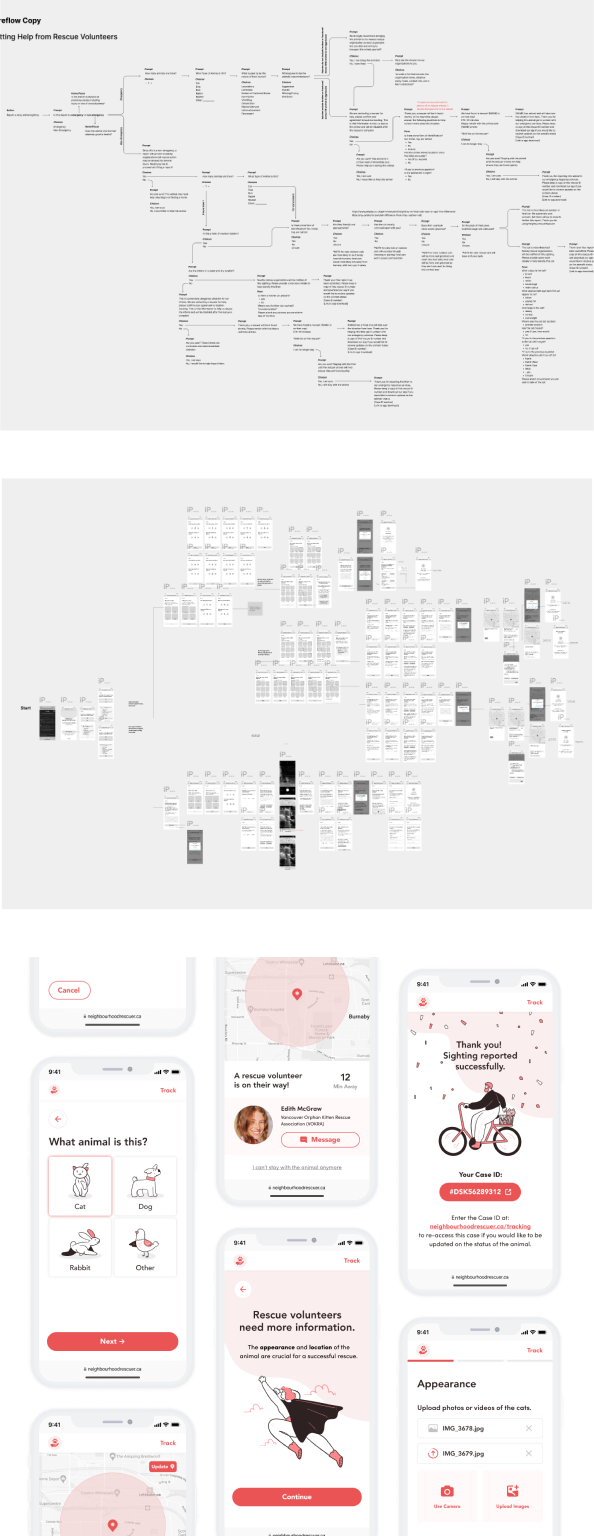
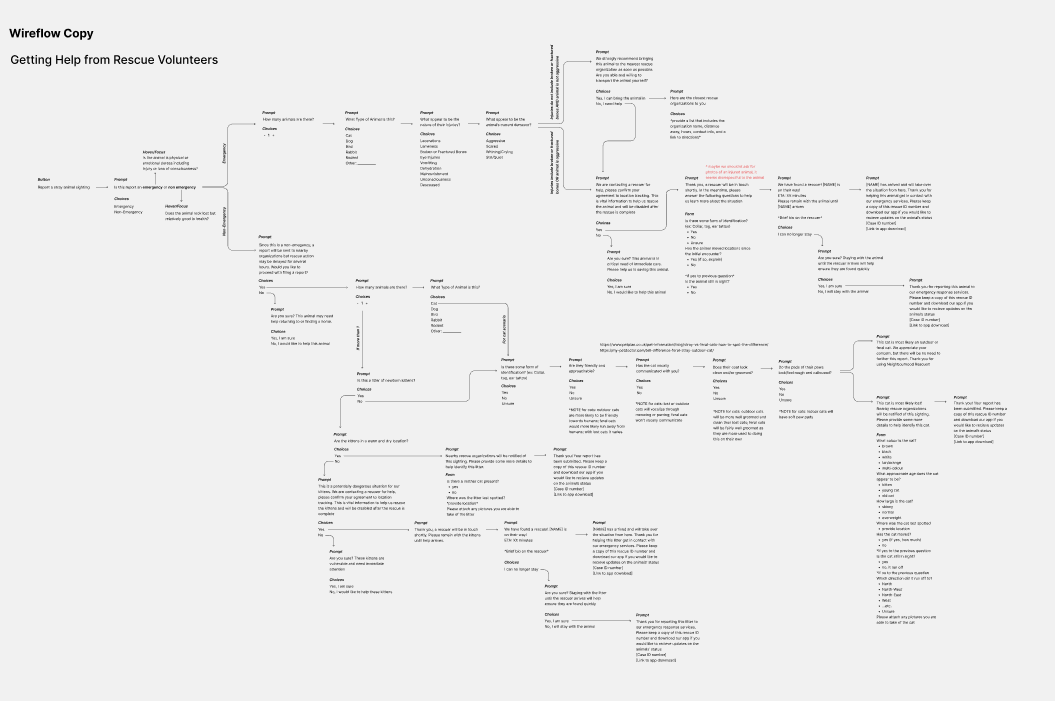
Built a full interaction flow and wireframes, with particular focus on the finder's survey sequence — the highest-risk area for overwhelming a first-time user. Design priority: pacing, surfacing only what's needed at each step.
Developed one shared style guide, then built two distinct products: a mobile app for Edith (fast request handling, coordination) and a web app for Mickey (calm, step-by-step confidence-building for a first-time user). One visual system, two interfaces tailored to context.
User Testing
Tested each prototype with matched participants — real volunteers for the rescuer app, inexperienced users for the finder app — since success looked different for each. Rescuer app: does it streamline a real workflow? Finder app: does a first-timer feel confident, not just able to click through?
Predefined task-based sessions, confidential responses. Also ran A/B tests on branding decisions (including colour) to check for measurable impact on user experience.
Data Analysis & Refinement for Proposal
Used affinity diagramming to sort testing notes by product and theme, rather than reacting to individual comments in isolation. This produced pattern-based, evidence-backed decisions for every refinement.
Result: final prototypes for the finder web app, rescuer mobile app, and rescuer onboarding flow shaped by real user behaviour, not just initial assumptions.

Like what you see? Let’s connect

Back to all projects

Sarah Daniels
Product Design
Neighbourhood Rescuer
End-To-End Process
Overview
Neighbourhood Rescuer is a dual platform system that aims to improve the rescue process of stray animals in your community.
Following a short situational assessment, individuals are provided the required resources to take appropriate action on the situation - including the opportunity to connect with an experienced rescue volunteer nearby.
Problem
The real problem isn't a lack of resources — Google searches do surface rescue organizations and hotlines. It's that an inexperienced finder has no way to know which one applies. Is the animal lost, a stray, injured, or in no danger at all? Without a clear read on the situation, people can't tell whether they're looking at the right contact, the right organization, or whether the animal needs intervention in the first place.
Design Statement
How might we empower individuals who encounter strays to better respond to them in their time of need?
Solution
Neighbourhood Rescuer
An online tool that will increase the success of stray animal rescue by providing people a way to quickly determine what to do given their unique situation and, if needed, contact appropriate help.

VanUX Awards
Named a finalist (top 3), Best Student Project, 2023 VanUX Awards. This recognition provided validation of both the process and outcome.
Prototypes
Finder’s Web App
Rescuer’s Mobile App
Onboarding for Mobile App
Roles & Responsibilities
UX Research
- Domain Research
- User Interviews
- User Testing
UI Design | Figma
- Workflows
- Rescuer Mobile App
Illustration | Procreate
- Injury Graphics
- NR Logo
Prototyping | Protopie
- Web App
- Mobile App

Process
Research
We used three methods to understand the problem: interviews with people who'd experienced stray encounters, rescues, or shelter work, analysis of online search results, and review of online forums and communities (Reddit, Facebook) where people sought or gave advice. Research also pointed to Gen Y/Z as the target user.
Across all three methods, one pattern held: when someone finds a stray, they turn to Google and forum threads, not a direct resource.
The real problem wasn't a lack of information — it was no clear path to the right help. Search results are inconsistent and rarely account for urgency or location. Professional help isn't always available (limited clinic hours), and even successful rescues often hit a housing bottleneck. This shaped our guiding question: How might we empower individuals who encounter strays to better respond to them in their time of need?
We scoped two platforms (web and mobile) matched to two different contexts: a one-time, unplanned encounter vs. an experienced volunteer's ongoing use.
User Personas
Built around two people on opposite sides of one interaction: Mickey, an average person who unexpectedly finds a stray, and Edith, an experienced rescue volunteer.
- Mickey — wants to help but doesn't know how; frustrated by unclear information, eager for fast guidance
- Edith — wants more consistent public engagement in stray care; frustrated by limited clinic/shelter accessibility
Designing for both at once defined the platform's core goal: help people quickly determine what to do — including whether rescue is even needed — and connect them to the right contact for help.
User Persona : Encounters the stray
Mickey
Triggers:
- Had lost a pet when was he was 10 ever since then has grown fondly to help pets and wants to do something that helps the world by giving back to the community.
- Has been hearing in the news of how a lot of the pets were fostered or adopted during the COVID times which motivated him to help.
- Is annoyed that when in need of important information regarding animal rescue, he has to surf through a lot of website to find a crucial answer.
Goals:
- Eager to find a platform that could easily connect him to volunteers and people who foster animals to know more about the process.
- Wants a quick solution in terms of helping animals in need especially stray animals.
User Persona : Rescue Volunteer from Organization
Edith
Triggers:
- Wants people to be proactive with volunteering and helping the community when it comes to saving animals
- She is frustrated when people surrender their pets due to their own ignorance about they pet’s needs, especially when they abandon their animal after they’ve adopted them during COVID times and are now unable to make the time to care for it because they no longer work from home
- Has noticed a lot of clinics & shelters are inaccessible after a certain time
Goals:
- Wants more engagement from young people and wants to find a way that makes volunteering an easy process
- Wants a solution that connects willing volunteers and foster caretakers to people like Mickey when they come across a stray animal, injured or not.
User Journey Mapping
Mapped three journeys:
- Mickey without the platform,
- Mickey with it, and
- Edith responding as a volunteer.
Starting with the "without" journey let us pinpoint exactly where the current process breaks down before designing around those failure points.
Each journey tracked doing, thinking, and feeling at every step, surfacing insights the interviews alone hadn't, like how much uncertainty builds before Mickey even starts searching. Comparing "with" vs. "without" side by side became the clearest evidence of the platform's value: same starting point, dramatically shorter path to resolution.
Journey 01
Mickey encounters stray kittens on his way home. He does not use Neighbourhood Rescuer.
Doing
Thinking
Insights
Mickey waits for the bus home alone at night in a quiet neighborhood. It’s 11:30PM.
He hears meowing and discovers a small litter of kittens hiding behind the bushes.
“What are they doing here? I wonder what happened to them and where they came from?”
“What should I do? I’ve never been in this situation before.”
“Oh good, they should be able to help me.”
“Nevermind, that was not helpful.”
Many shelters and clinics have limited operation hours.
Search engine results are long, varied and often do not address urgency of situation.
People, between the ages of 18 to 29 years will tend to search for help using their phone.
“This is frustrating. My bus is coming soon, what do I do....”
“Why’s is so hard to find relevant info? How many more pages do I have to visit to find something helpful?!”
He does not know what to do during the moment and decides to go on his phone to search what he should do.
At the very top of the list of search results, he sees advice to call SPCA.
He looks up their number and calls, but is told that the SPCA is closing soon and would not be able to send anyone for help.
Mickey continues looking through search results for advice. He sees examples of tips, but none address the time-sensitive nature of the situation he’s currently in.
Mickey looks on Reddit for advice. He sees many search results, some dating back seven years.
ENCOUNTER
SEARCH FOR HELP
He clicks the first link, sees that it’s incredibly long, and tries scanning it quickly for helpful advice that might pertain to him.
Many of the comments aren’t helpful or relevant. One, however, does suggest calling a local animal shelter.
“But I already tried contacting SPCA and they’re closing. The situation feels helpless...”
“Oh my god this post is so long and there are so many irrelevant comments.”
“I don’t know how else I can help them. I can’t bring them home... I also don’t want to miss my bus.”
“I wonder what ended up happening to them. Are they safe?”
The bus arrives. Mickey decides to get on and leave.
Mickey takes the same bus home again, but this time the kittens are not there.
Honing down on a useful resource is time-consuming, and often help is not immediate.
GIVE UP
POST-EVENT
A week goes by
Journey 02
Mickey encounters stray kittens on his way home. He uses Neighbourhood Rescuer.
Doing
Thinking
Insights
Mickey waits for the bus home alone at night in a quiet neighborhood. It’s 11:30PM.
He hears meowing and discovers a small litter of kittens hiding behind the bushes.
“What are they doing here? I wonder what happened to them and where they came from?”
“What should I do? I’ve never been in this situation before.”
“Oh good, their assessment tool should be able to help me.”
“Okay, this tool appears useful. I will click into it.”
Rescuers want to assess the urgency of the situation, as well as first determine whether this stray is someone’s pet before taking action.
People, between the ages of 18 to 29 years will tend to search for help using their phone.
“I feel a little more confident that these stray kittens will be saved.”
“I’m glad these questions and response options are helping be manage the situation.”
He does not know what to do during the moment and decides to go on his phone to search what he should do.
At the very top of the list of search results, he sees Neighbourhood Rescuer. Mickey clicks into the web app.
Mickey reads on Neighbourhood Rescuer (NR)’s home page that it’s a tool for reporting strays. He sees a large button asking if he wants to report a stray sighting. He clicks it.
He sees a series of short questions to assess the urgency. These include:
- What kind of animal?
- How many animals?
- Form of identification (e.g. collar, ear tattoo)?
- Signs of distress/injury?
Mickey responds with:
- Kittens
- 5 kittens
- No identification
- Hungry/starving
ENCOUNTER
SEARCH FOR HELP
NR recommends Mickey contact an animal rescue organization since the kittens require medical care. He is given 2 options:
- If capable, he can bring them to the rescue himself
- Otherwise, he will be connected to a local rescue volunteer in the area
Mickey knows he han’t bring the kittens home, nor does he have the means to transport them to a shelter safely.
He selects option 2 - connect with a rescue volunteer.
“I can’t bus home with a whole litter of kittens! Plus there’s no way they all can stay in my apartment where pets are not allowed.”
“Thank goodness I am able to ask for help!?
“Okay. The kittens are staying in one place. I can take a look at them...”
NR connects Mickey to a local rescue volunteer. Before help is dispatched, the web app asks him for information such as...
- Further description of the stray
- Where the stray was first sighted and last spotted
Commonly, rescuers will bring the stray into a clinic to check for microchip ID, medical examination, and perform vaccinations before the stray joins a shelter or foster home.
HELP SECURED
USING NEIGHBOURHOOD RESCUER
Mickey is given the option to attach images as well as using his live phone location to supplement a more accurate location description.
“I don’t mind sharing my location when I take pictures of the kittens.”
When assessing the situation of a stray, rescuers want to get a good description of the animal as well as a good grasp of its location, especially where it’s most often seen.
Mickey attaches the photos, links his live location, and submits this information.
The app responds with:
“Thank you for the info. Hold on while we connect you to the closest available rescuer.”
“Great, I’m one step closer in getting help!”
Calibration process begins. This can take where between a minute or longer as the app searches for a nearby rescuer that is available.
NR tells Mickey that they’ve found a volunteer, Edith, nearby who has been notified of the situation and is currently on their way.
“Phew, someone is coming!”
Often volunteers who are part of a rescue organization are willing to do what they can, even ourside their shift house, to help an animal in need.
Journey 03
Edith, volunteer rescuer, is contacted for rescuing stray kittens at night.
Doing
Thinking
Insights
Edith receives a notification from Neighbourhood Rescuer regarding stray cats needing rescue nearby.
Edith sees the information Mickey submitted on the app, including photos of the cats and his location.
“This seems like some pretty reliable information, I think I’ll take on this rescue request.”
“Before I head out, I need to make sure I have all my proper gear prepared.”
“I’m coming kittens!”
Rescuers want to assess the urgency of the situation, as well as first determine whether this stray is someone’s pet before taking action.
Going out at night can make the volunteer feel unsafe if the information provided is not reliable.
“This will make it easier to find him”
“Oh no! At least he waited until he knew a rescuer was coming.”
Edit decides to take on the rescue mission. She let’s Mickey know that the will come help through the app.
According to the information, Edith prepares the needed tools such as a trap and gloves.
Edith takes her car and is about 15 minutes away.
Edith receives a message from Mickey on the app regarding his specific location
Edith is notified that Mickey had to leave to catch his bus. The kittens are now left unattended.
SUMMONING
RESPONDING
Edith performs the rescue by easily grabbing them and putting them in her cage.
Edith brings the kittens home for temporary housing until the shelters opened in the morning.
“Good thing these kittens are timid, this was an easy rescue.”
The next morning, Edith brings the kittens to VOKRA
Volunteer workers are more inclined to provide help and temporary housing.
Through the app, Edit sends Mickey an update regarding the kittens.
“He must be curious if the kittens are okay, I should let him know.”
Rescuers normally bring food and a cage for trapping
People often want peace of mind regarding the state of the animal(s) they encountered.
RESCUING
POST - RESCUING
Wireflows, Mockups & Prototyping
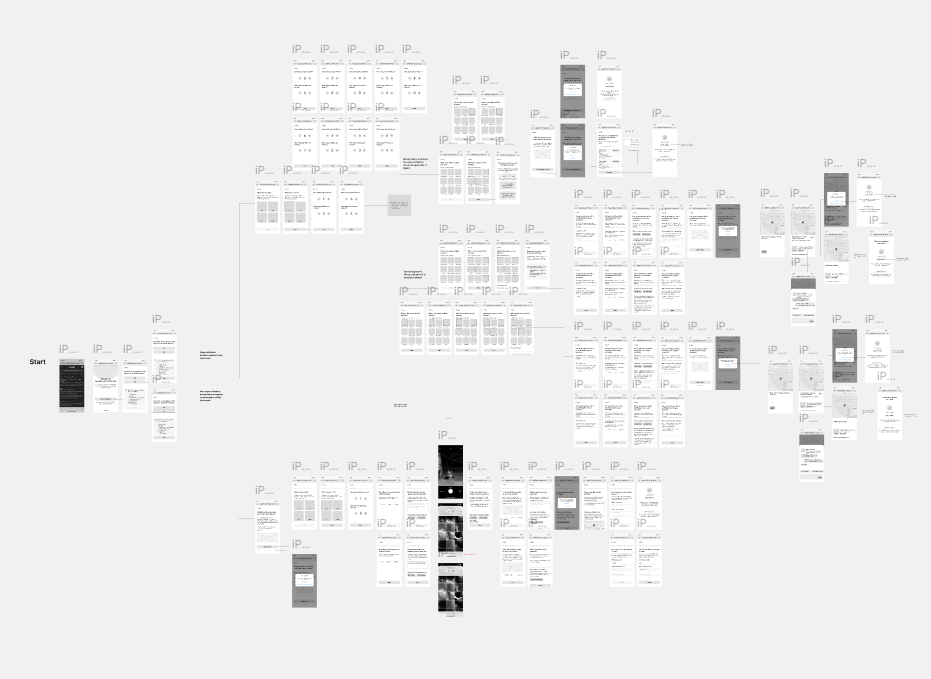
Built a full interaction flow and wireframes, with particular focus on the finder's survey sequence — the highest-risk area for overwhelming a first-time user. Design priority: pacing, surfacing only what's needed at each step.
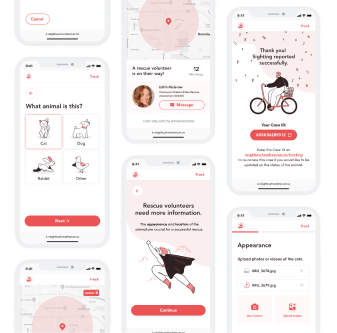
Developed one shared style guide, then built two distinct products: a mobile app for Edith (fast request handling, coordination) and a web app for Mickey (calm, step-by-step confidence-building for a first-time user). One visual system, two interfaces tailored to context.
User Testing
Tested each prototype with matched participants — real volunteers for the rescuer app, inexperienced users for the finder app — since success looked different for each. Rescuer app: does it streamline a real workflow? Finder app: does a first-timer feel confident, not just able to click through?
Predefined task-based sessions, confidential responses. Also ran A/B tests on branding decisions (including colour) to check for measurable impact on user experience.
Data Analysis & Refinement for Proposal
Used affinity diagramming to sort testing notes by product and theme, rather than reacting to individual comments in isolation. This produced pattern-based, evidence-backed decisions for every refinement.
Result: final prototypes for the finder web app, rescuer mobile app, and rescuer onboarding flow shaped by real user behaviour, not just initial assumptions.

Like what you see? Let’s connect
Back to all projects
Sarah Daniels
Product Design
Neighbourhood Rescuer
End-To-End Process
Overview
Neighbourhood Rescuer is a dual platform system that aims to improve the rescue process of stray animals in your community.
Following a short situational assessment, individuals are provided the required resources to take appropriate action on the situation - including the opportunity to connect with an experienced rescue volunteer nearby.
Problem
The real problem isn't a lack of resources — Google searches do surface rescue organizations and hotlines. It's that an inexperienced finder has no way to know which one applies. Is the animal lost, a stray, injured, or in no danger at all? Without a clear read on the situation, people can't tell whether they're looking at the right contact, the right organization, or whether the animal needs intervention in the first place.
Design Statement
How might we empower individuals who encounter strays to better respond to them in their time of need?
Solution
Neighbourhood Rescuer
An online tool that will increase the success of stray animal rescue by providing people a way to quickly determine what to do given their unique situation and, if needed, contact appropriate help.

VanUX Awards
Named a finalist (top 3), Best Student Project, 2023 VanUX Awards. This recognition provided validation of both the process and outcome.
Prototypes
Finder’s Web App
Rescuer’s Mobile App
Onboarding for Mobile App
Roles & Responsibilities
UX Research
- Domain Research
- User Interviews
- User Testing
UI Design | Figma
- Workflows
- Rescuer Mobile App
Illustration | Procreate
- Injury Graphics
- NR Logo
Prototyping | Protopie
- Web App
- Mobile App

Process
Research
We used three methods to understand the problem: interviews with people who'd experienced stray encounters, rescues, or shelter work, analysis of online search results, and review of online forums and communities (Reddit, Facebook) where people sought or gave advice. Research also pointed to Gen Y/Z as the target user.
Across all three methods, one pattern held: when someone finds a stray, they turn to Google and forum threads, not a direct resource.
The real problem wasn't a lack of information — it was no clear path to the right help. Search results are inconsistent and rarely account for urgency or location. Professional help isn't always available (limited clinic hours), and even successful rescues often hit a housing bottleneck. This shaped our guiding question: How might we empower individuals who encounter strays to better respond to them in their time of need?
We scoped two platforms (web and mobile) matched to two different contexts: a one-time, unplanned encounter vs. an experienced volunteer's ongoing use.
User Personas
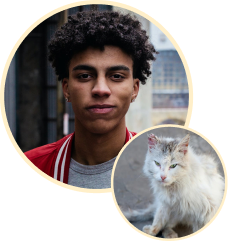
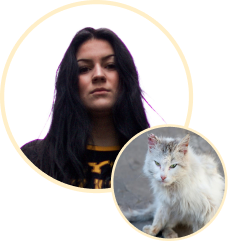
Built around two people on opposite sides of one interaction: Mickey, an average person who unexpectedly finds a stray, and Edith, an experienced rescue volunteer.
- Mickey — wants to help but doesn't know how; frustrated by unclear information, eager for fast guidance
- Edith — wants more consistent public engagement in stray care; frustrated by limited clinic/shelter accessibility
Designing for both at once defined the platform's core goal: help people quickly determine what to do — including whether rescue is even needed — and connect them to the right contact for help.
User Persona : Encounters the stray
Mickey
Triggers:
- Had lost a pet when was he was 10 ever since then has grown fondly to help pets and wants to do something that helps the world by giving back to the community.
- Has been hearing in the news of how a lot of the pets were fostered or adopted during the COVID times which motivated him to help.
- Is annoyed that when in need of important information regarding animal rescue, he has to surf through a lot of website to find a crucial answer.
Goals:
- Eager to find a platform that could easily connect him to volunteers and people who foster animals to know more about the process.
- Wants a quick solution in terms of helping animals in need especially stray animals.
User Persona : Rescue Volunteer from Organization
Edith
Triggers:
- Wants people to be proactive with volunteering and helping the community when it comes to saving animals
- She is frustrated when people surrender their pets due to their own ignorance about they pet’s needs, especially when they abandon their animal after they’ve adopted them during COVID times and are now unable to make the time to care for it because they no longer work from home
- Has noticed a lot of clinics & shelters are inaccessible after a certain time
Goals:
- Wants more engagement from young people and wants to find a way that makes volunteering an easy process
- Wants a solution that connects willing volunteers and foster caretakers to people like Mickey when they come across a stray animal, injured or not.
User Journey Mapping
Mapped three journeys:
- Mickey without the platform,
- Mickey with it, and
- Edith responding as a volunteer.
Starting with the "without" journey let us pinpoint exactly where the current process breaks down before designing around those failure points.
Each journey tracked doing, thinking, and feeling at every step, surfacing insights the interviews alone hadn't, like how much uncertainty builds before Mickey even starts searching. Comparing "with" vs. "without" side by side became the clearest evidence of the platform's value: same starting point, dramatically shorter path to resolution.
Journey 01
Mickey encounters stray kittens on his way home. He does not use Neighbourhood Rescuer.
Doing
Thinking
Insights
Mickey waits for the bus home alone at night in a quiet neighborhood. It’s 11:30PM.
He hears meowing and discovers a small litter of kittens hiding behind the bushes.
“What are they doing here? I wonder what happened to them and where they came from?”
“What should I do? I’ve never been in this situation before.”
“Oh good, they should be able to help me.”
“Nevermind, that was not helpful.”
Many shelters and clinics have limited operation hours.
Search engine results are long, varied and often do not address urgency of situation.
People, between the ages of 18 to 29 years will tend to search for help using their phone.
“This is frustrating. My bus is coming soon, what do I do....”
“Why’s is so hard to find relevant info? How many more pages do I have to visit to find something helpful?!”
He does not know what to do during the moment and decides to go on his phone to search what he should do.
At the very top of the list of search results, he sees advice to call SPCA.
He looks up their number and calls, but is told that the SPCA is closing soon and would not be able to send anyone for help.
Mickey continues looking through search results for advice. He sees examples of tips, but none address the time-sensitive nature of the situation he’s currently in.
Mickey looks on Reddit for advice. He sees many search results, some dating back seven years.
ENCOUNTER
SEARCH FOR HELP
He clicks the first link, sees that it’s incredibly long, and tries scanning it quickly for helpful advice that might pertain to him.
Many of the comments aren’t helpful or relevant. One, however, does suggest calling a local animal shelter.
“But I already tried contacting SPCA and they’re closing. The situation feels helpless...”
“Oh my god this post is so long and there are so many irrelevant comments.”
“I don’t know how else I can help them. I can’t bring them home... I also don’t want to miss my bus.”
“I wonder what ended up happening to them. Are they safe?”
The bus arrives. Mickey decides to get on and leave.
Mickey takes the same bus home again, but this time the kittens are not there.
Honing down on a useful resource is time-consuming, and often help is not immediate.
GIVE UP
POST-EVENT
A week goes by
Journey 02
Mickey encounters stray kittens on his way home. He uses Neighbourhood Rescuer.
Doing
Thinking
Insights
Mickey waits for the bus home alone at night in a quiet neighborhood. It’s 11:30PM.
He hears meowing and discovers a small litter of kittens hiding behind the bushes.
“What are they doing here? I wonder what happened to them and where they came from?”
“What should I do? I’ve never been in this situation before.”
“Oh good, their assessment tool should be able to help me.”
“Okay, this tool appears useful. I will click into it.”
Rescuers want to assess the urgency of the situation, as well as first determine whether this stray is someone’s pet before taking action.
People, between the ages of 18 to 29 years will tend to search for help using their phone.
“I feel a little more confident that these stray kittens will be saved.”
“I’m glad these questions and response options are helping be manage the situation.”
He does not know what to do during the moment and decides to go on his phone to search what he should do.
At the very top of the list of search results, he sees Neighbourhood Rescuer. Mickey clicks into the web app.
Mickey reads on Neighbourhood Rescuer (NR)’s home page that it’s a tool for reporting strays. He sees a large button asking if he wants to report a stray sighting. He clicks it.
He sees a series of short questions to assess the urgency. These include:
- What kind of animal?
- How many animals?
- Form of identification (e.g. collar, ear tattoo)?
- Signs of distress/injury?
Mickey responds with:
- Kittens
- 5 kittens
- No identification
- Hungry/starving
ENCOUNTER
SEARCH FOR HELP
NR recommends Mickey contact an animal rescue organization since the kittens require medical care. He is given 2 options:
- If capable, he can bring them to the rescue himself
- Otherwise, he will be connected to a local rescue volunteer in the area
Mickey knows he han’t bring the kittens home, nor does he have the means to transport them to a shelter safely.
He selects option 2 - connect with a rescue volunteer.
“I can’t bus home with a whole litter of kittens! Plus there’s no way they all can stay in my apartment where pets are not allowed.”
“Thank goodness I am able to ask for help!?
“Okay. The kittens are staying in one place. I can take a look at them...”
NR connects Mickey to a local rescue volunteer. Before help is dispatched, the web app asks him for information such as...
- Further description of the stray
- Where the stray was first sighted and last spotted
Commonly, rescuers will bring the stray into a clinic to check for microchip ID, medical examination, and perform vaccinations before the stray joins a shelter or foster home.
HELP SECURED
USING NEIGHBOURHOOD RESCUER
Mickey is given the option to attach images as well as using his live phone location to supplement a more accurate location description.
“I don’t mind sharing my location when I take pictures of the kittens.”
When assessing the situation of a stray, rescuers want to get a good description of the animal as well as a good grasp of its location, especially where it’s most often seen.
Mickey attaches the photos, links his live location, and submits this information.
The app responds with:
“Thank you for the info. Hold on while we connect you to the closest available rescuer.”
“Great, I’m one step closer in getting help!”
Calibration process begins. This can take where between a minute or longer as the app searches for a nearby rescuer that is available.
NR tells Mickey that they’ve found a volunteer, Edith, nearby who has been notified of the situation and is currently on their way.
“Phew, someone is coming!”
Often volunteers who are part of a rescue organization are willing to do what they can, even ourside their shift house, to help an animal in need.
Journey 03
Edith, volunteer rescuer, is contacted for rescuing stray kittens at night.
Doing
Thinking
Insights
Edith receives a notification from Neighbourhood Rescuer regarding stray cats needing rescue nearby.
Edith sees the information Mickey submitted on the app, including photos of the cats and his location.
“This seems like some pretty reliable information, I think I’ll take on this rescue request.”
“Before I head out, I need to make sure I have all my proper gear prepared.”
“I’m coming kittens!”
Rescuers want to assess the urgency of the situation, as well as first determine whether this stray is someone’s pet before taking action.
Going out at night can make the volunteer feel unsafe if the information provided is not reliable.
“This will make it easier to find him”
“Oh no! At least he waited until he knew a rescuer was coming.”
Edit decides to take on the rescue mission. She let’s Mickey know that the will come help through the app.
According to the information, Edith prepares the needed tools such as a trap and gloves.
Edith takes her car and is about 15 minutes away.
Edith receives a message from Mickey on the app regarding his specific location
Edith is notified that Mickey had to leave to catch his bus. The kittens are now left unattended.
SUMMONING
RESPONDING
Edith performs the rescue by easily grabbing them and putting them in her cage.
Edith brings the kittens home for temporary housing until the shelters opened in the morning.
“Good thing these kittens are timid, this was an easy rescue.”
The next morning, Edith brings the kittens to VOKRA
Volunteer workers are more inclined to provide help and temporary housing.
Through the app, Edit sends Mickey an update regarding the kittens.
“He must be curious if the kittens are okay, I should let him know.”
Rescuers normally bring food and a cage for trapping
People often want peace of mind regarding the state of the animal(s) they encountered.
RESCUING
POST - RESCUING
Wireflows, Mockups & Prototyping
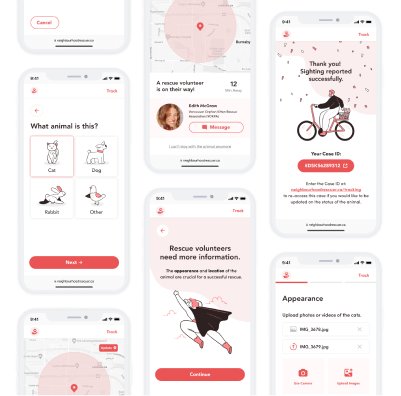
Built a full interaction flow and wireframes, with particular focus on the finder's survey sequence — the highest-risk area for overwhelming a first-time user. Design priority: pacing, surfacing only what's needed at each step.
Developed one shared style guide, then built two distinct products: a mobile app for Edith (fast request handling, coordination) and a web app for Mickey (calm, step-by-step confidence-building for a first-time user). One visual system, two interfaces tailored to context.
User Testing
Tested each prototype with matched participants — real volunteers for the rescuer app, inexperienced users for the finder app — since success looked different for each. Rescuer app: does it streamline a real workflow? Finder app: does a first-timer feel confident, not just able to click through?
Predefined task-based sessions, confidential responses. Also ran A/B tests on branding decisions (including colour) to check for measurable impact on user experience.
Data Analysis & Refinement for Proposal
Used affinity diagramming to sort testing notes by product and theme, rather than reacting to individual comments in isolation. This produced pattern-based, evidence-backed decisions for every refinement.
Result: final prototypes for the finder web app, rescuer mobile app, and rescuer onboarding flow shaped by real user behaviour, not just initial assumptions.
Like what you see? Let’s connect
Back to all projects
Sarah Daniels
Product Design